


Board remains split 3-2 after lengthy discussion over whether existing regulations already provide enough protection
By Allison Peck
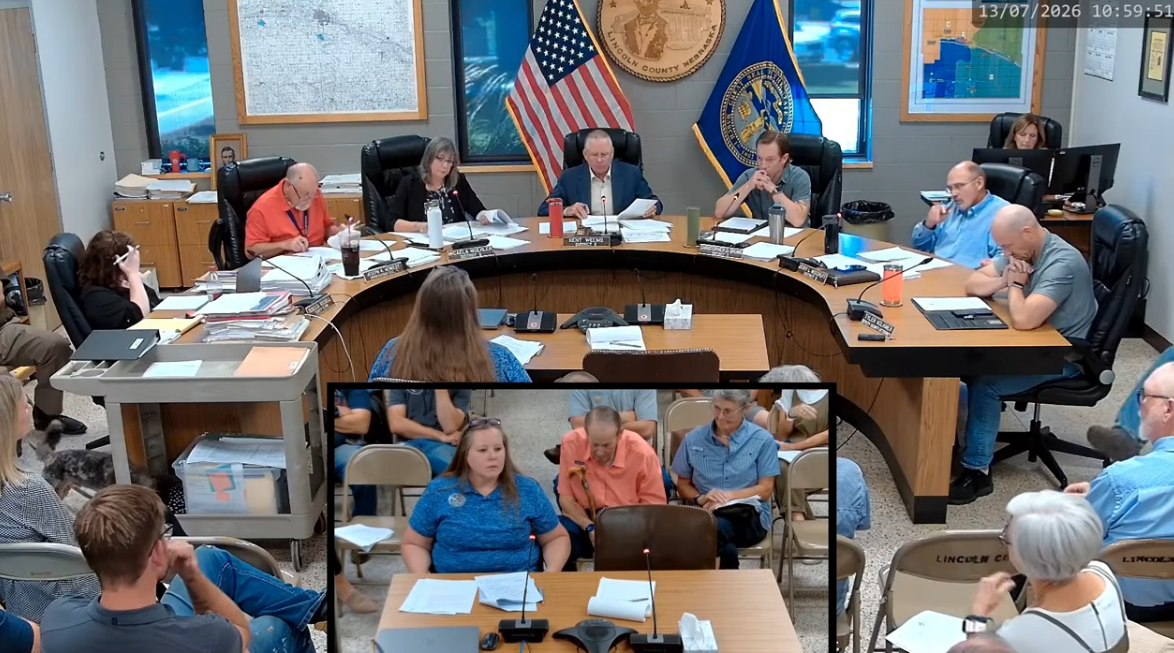
Editor's Note: Monday's discussion on data centers lasted several hours, including extended public comment and board deliberation. To accurately reflect the meeting and make the coverage easier to follow, the North Platte Post will publish multiple articles covering different aspects of the July 13, 2026, Lincoln County Board of Commissioners meeting.
NORTH PLATTE, Neb. — After nearly three hours of discussion focused on potential data center development, Lincoln County commissioners once again declined to place a temporary pause on future projects, instead reaffirming their belief that existing regulations already give the county the authority to review and regulate any application that may come forward.
The board voted 3-2 Monday to reject a proposed six-month moratorium, with Commissioners Micaela Wuehler and Kent Weems supporting the temporary pause while Joe Hewgley, Chris Bruns and Jerry Woodruff voted against it — the same split seen during the board's June meeting.
Unlike last month's discussion, however, much of Monday's debate centered less on whether a moratorium was appropriate and more on answering questions that have surfaced in recent weeks about what authority the county already has under its current zoning regulations.
Planning and Zoning Administrator Judy Clark spent much of the meeting walking commissioners through that process, repeatedly emphasizing that while Lincoln County continues refining proposed regulations, it is not starting from scratch.
"I do not have an application on my desk," Clark said, addressing speculation that a data center proposal is already pending before the county.
Clark said county staff has spent the past two years researching data center development, reviewing regulations from other communities and working with agencies including Nebraska Public Power District and Twin Platte Natural Resources District while developing draft regulations tailored to Lincoln County.
She reminded commissioners that both the county's zoning regulations and comprehensive plan are intended to evolve as new industries emerge.
"They're living, breathing documents," Clark said.
Much of Clark's presentation focused on the county's conditional use permit process, which she said would require public hearings before both the Planning Commission and County Board of Commissioners and allow county officials to impose project-specific conditions or deny an application that fails to meet local standards.
She also outlined a number of draft regulations expected to be discussed by the Planning Commission, including standards addressing water use, electrical infrastructure, setbacks, noise, road agreements, environmental studies, landscaping and screening requirements.
Clark acknowledged the county's work is ongoing.
"The more I learn, the less I know," she said, adding that regulations will continue to evolve as the county gathers additional information.
Deputy Lincoln County Attorney Tyler Volkmer also addressed commissioners, explaining portions of Nebraska law governing data center development, including requirements for community benefit agreements that must be completed before an application can be considered complete.
He also clarified that the state's permitting timeline does not begin simply because a developer expresses interest in a project, but only after a complete application has been submitted.
For commissioners opposing the moratorium, those explanations reinforced what they have argued throughout the debate.
Bruns repeatedly questioned Clark about the county's existing authority, asking whether commissioners could already regulate water use, electrical infrastructure, setbacks, sound levels and other project-specific concerns through the conditional use permit process.
Each time, Clark answered yes.
Bruns said those answers demonstrated the county already has the tools necessary to protect residents while continuing to strengthen its regulations.
Supporters of the moratorium agreed the county has made significant progress but argued more time would allow officials to complete that work before any future application could move forward.
Wuehler said she believes a temporary pause would help "calm the public rhetoric" surrounding the issue while allowing the Planning Commission to continue refining its recommendations.
She also questioned whether the county could encounter issues that have not yet been identified, telling commissioners, "We don't know what we don't know."
Weems echoed those concerns, saying his support for the moratorium was not rooted in opposition to economic development but in allowing the county to finish its work before potentially being required to act under state permitting timelines.
Despite the differing opinions, commissioners from both sides agreed on one point: the county's review of data center regulations is not over.
Following the failed motion, Clark said Planning Commission members will continue reviewing proposed changes before forwarding recommendations to the County Board for consideration.
Monday's vote leaves the county's current regulations in place while that work continues.