


By Allison Peck
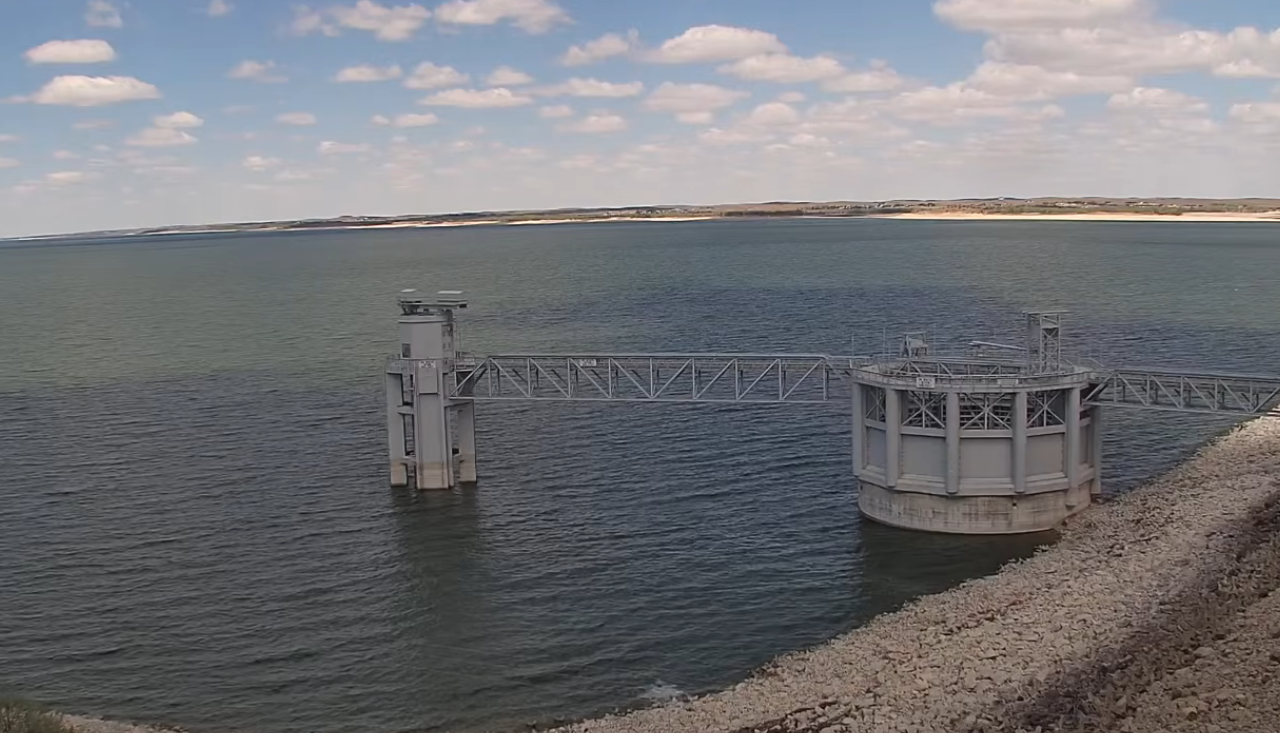
Lake McConaughy has fallen below 20% of its total capacity as concerns grow over the future of the reservoir and the potential impact on the Keith County economy.
Central Nebraska Public Power and Irrigation District reported the lake at 18.6% capacity Wednesday, with approximately 324,300 acre-feet of water stored in the reservoir. The lake was at 22.3% capacity during CNPPID's Sept. 8 board meeting.
The continued decline comes as CNPPID prepares for the 2027 irrigation season and implements additional conservation measures.
The CNPPID board approved a full irrigation delivery year for 2027, with the season scheduled to run from the week of June 7 through Aug. 29. The board also approved measures intended to encourage conservation because of the lake's low level.
The first nine inches of irrigation water will remain priced at $44.96 per acre. Water used above 12 inches will cost an additional $3.14 per inch, and irrigation deliveries will be capped at 18 inches.
CNPPID reported that 88% of its contracted acres have used 12 inches of irrigation water or less during the past seven irrigation seasons.
The district has also invested in long-term conservation measures. Since 2003, CNPPID estimates canal liners and pipelines have saved approximately 131,000 acre-feet of water, while pivot irrigation has saved an estimated 424,550 acre-feet.
Despite those conservation efforts, Keith County officials remain concerned about the lake's declining level and its broader economic impact.
Keith County Commissioner Lane Anderson said local residents and officials are working to bring greater attention to Lake McConaughy's situation. About a dozen people traveled to a Central Nebraska meeting Tuesday to advocate for the lake, and Anderson was scheduled to meet with U.S. Senator Pete Ricketts Thursday.
Anderson said the region needs a stronger voice in decisions affecting the lake.
“With a 20 percent lake, not a lot of hope for Lake McConaughy,” Anderson said. “It's going to be devastating for the Keith County economy.”
The concerns extend beyond recreation and tourism. Anderson pointed to the relationship between the lake, irrigation and the Gerald Gentleman Station, which relies on water for cooling.
“It's kind of a catch 22,” Anderson said. “We need that power, but we need to find an alternative way to cool that.”
Keith County is also continuing to invest in infrastructure around the lake. Anderson said approximately $10 million in road work is planned around Lake McConaughy next year.
The reservoir is the primary storage facility in CNPPID's system, which provides irrigation water to more than 100,000 acres and supports power generation, groundwater recharge and recreation.
Lake McConaughy also remains a major recreational destination, drawing an average of more than 1.3 million visitors annually, according to CNPPID.
Anderson said the upcoming meeting with Ricketts will focus on the history of Lake McConaughy, how the water system operates and how decisions involving the reservoir are made.
“I want some eyes with some teeth,” Anderson said.
For Keith County officials and residents, the immediate concern remains the shrinking water supply and what continued declines could mean for agriculture, recreation, power generation and the local economy.
“We just pray for a miracle,” Anderson said. “We pray for rain and we pray for good judgment.”