


By Allison Peck
Listen to the full interview on our Kubota Podcast
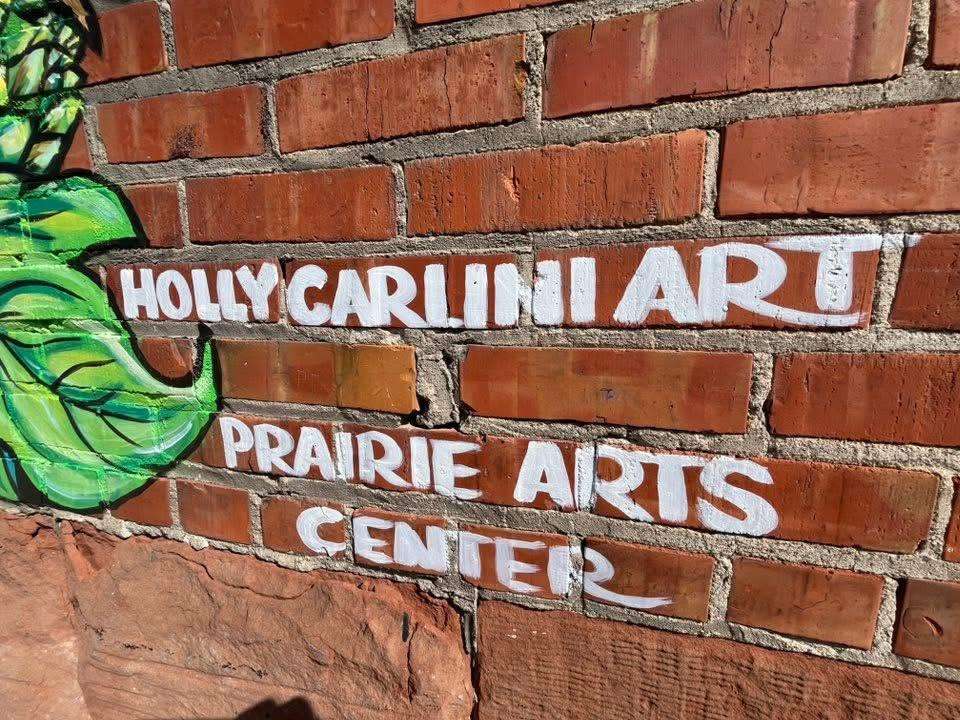
Whether residents realize it or not, many of the murals, public art projects and colorful installations scattered throughout North Platte have one thing in common: local artist Holly Carlini.
Carlini, who also serves as executive director of the Prairie Arts Center, has spent years creating artwork throughout the community. Her projects range from murals inside local businesses to painted wings, bottle cap murals in schools and collaborative community art pieces.
One of her earliest public art projects involved working with residents at the homeless shelter to create a painted tree mural. Since then, her work has expanded to include dozens of projects throughout the area, making her artistic style a familiar sight across North Platte.
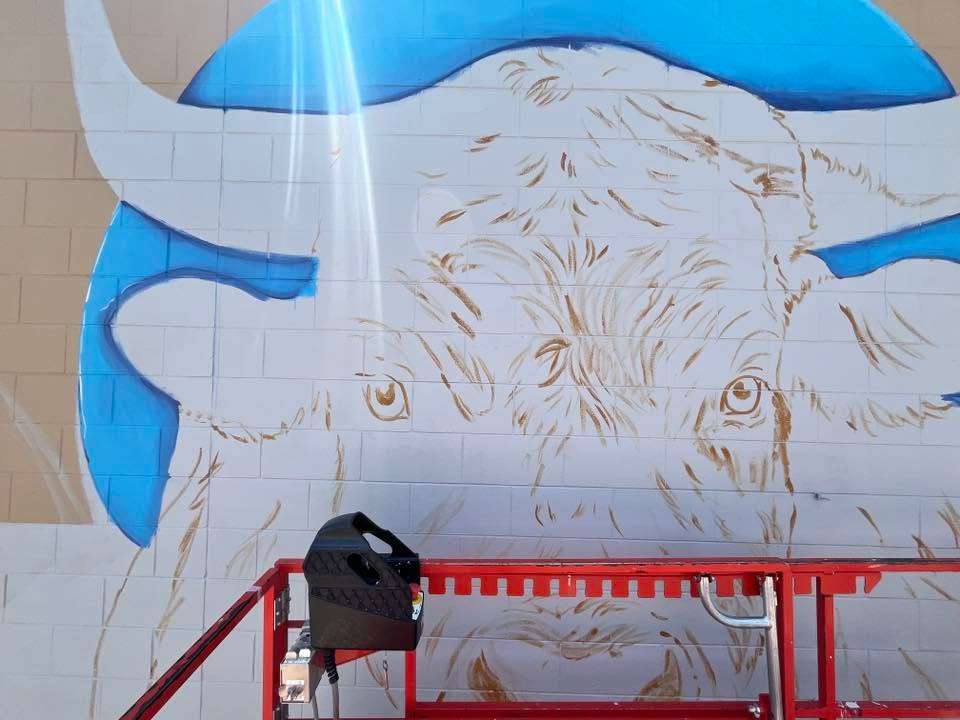
Her latest project, a large bull mural at Town & Country Western Wear, has attracted attention as residents watch the artwork take shape. Like many large-scale murals, the project requires hours of work spread across multiple days, with layers of paint and detail gradually transforming a blank surface into a finished piece.
That public visibility is one of the unique aspects of mural work. Unlike artwork displayed in a gallery, murals allow community members to witness the creative process as it happens. While that can create excitement and curiosity, it also means artists are often judged on unfinished work long before the final image emerges.
Every mural begins long before paint ever reaches the wall. Carlini typically starts with a sketch that is reviewed by the client. After revisions and approval, she creates a smaller painting to serve as a guide for the final piece before transferring the design to a larger surface.
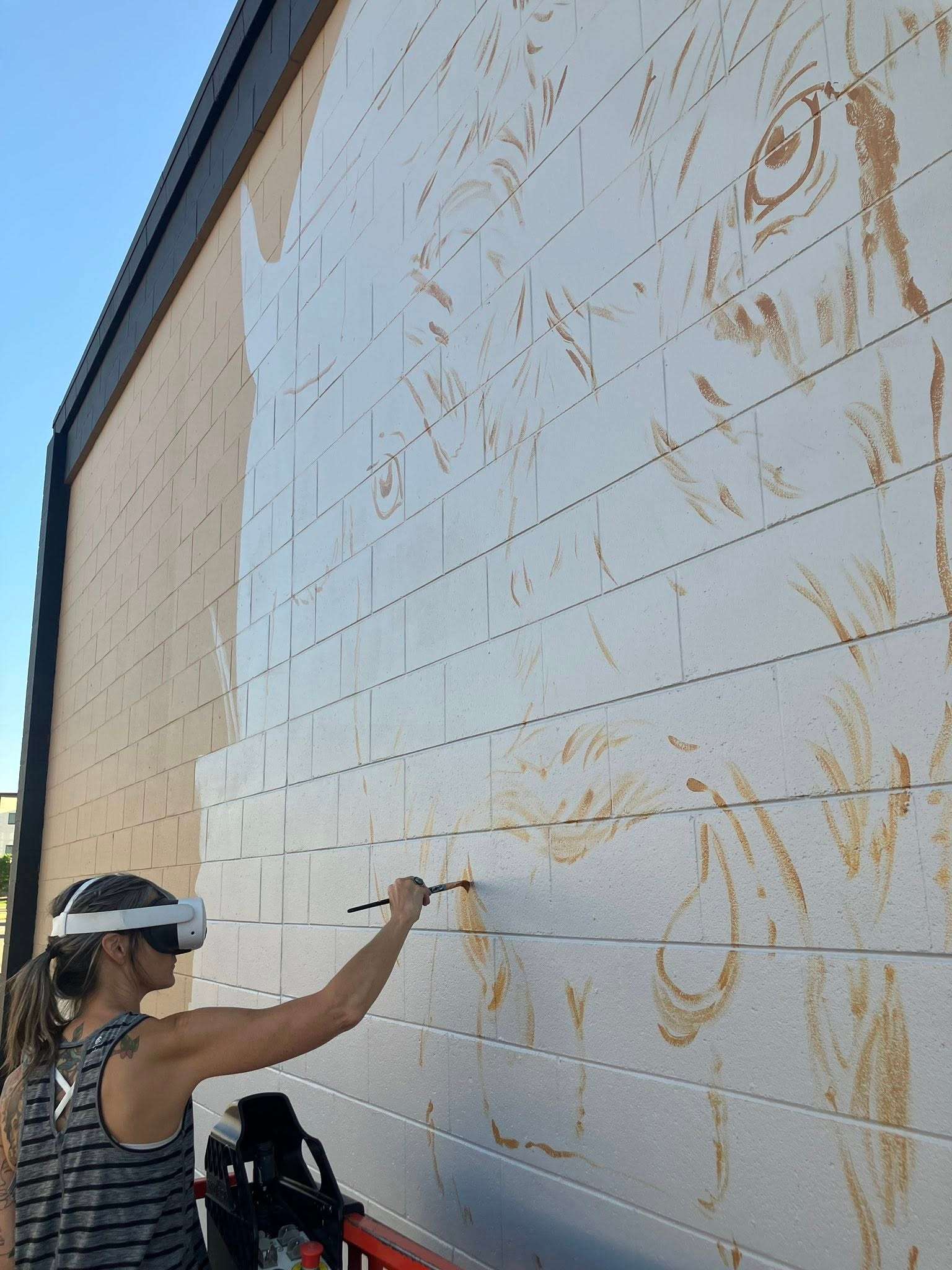
Advances in technology have changed that process over the years. While some artists still freehand their designs, Carlini also utilizes projectors and virtual reality technology to help position artwork on walls before painting begins.
Using a VR headset, she can upload a design and view it as a digital image floating in front of her while still seeing the surrounding environment. The technology allows her to resize and position artwork directly on a wall before outlining it for paint.
"It is your first reaction is, 'Whoa,'" Carlini said. "You just don't realize that you can still see."
While the technology can speed up the process, it is not always the best solution for every project. Factors such as building layouts and reflective surfaces can sometimes make traditional methods more practical.
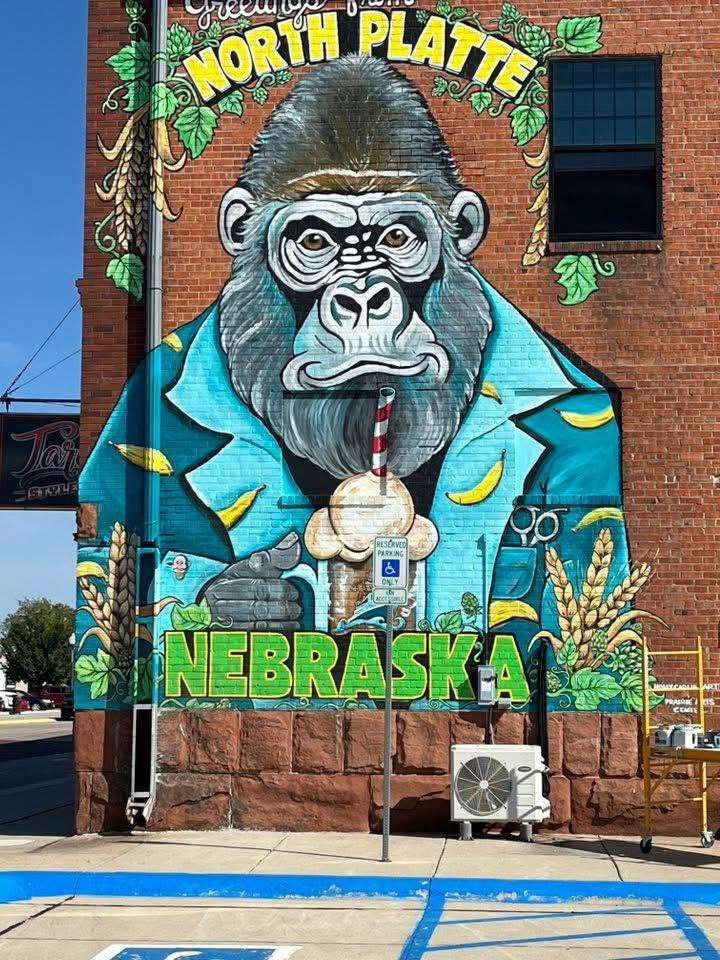
As public art continues to grow in popularity across Nebraska and neighboring states, Carlini is encouraged by the increasing appreciation for murals and other large-scale works. Communities are using public art to celebrate local history, create landmarks and bring new life to public spaces.
"It's really fun to see that people are so drawn to public art," she said.
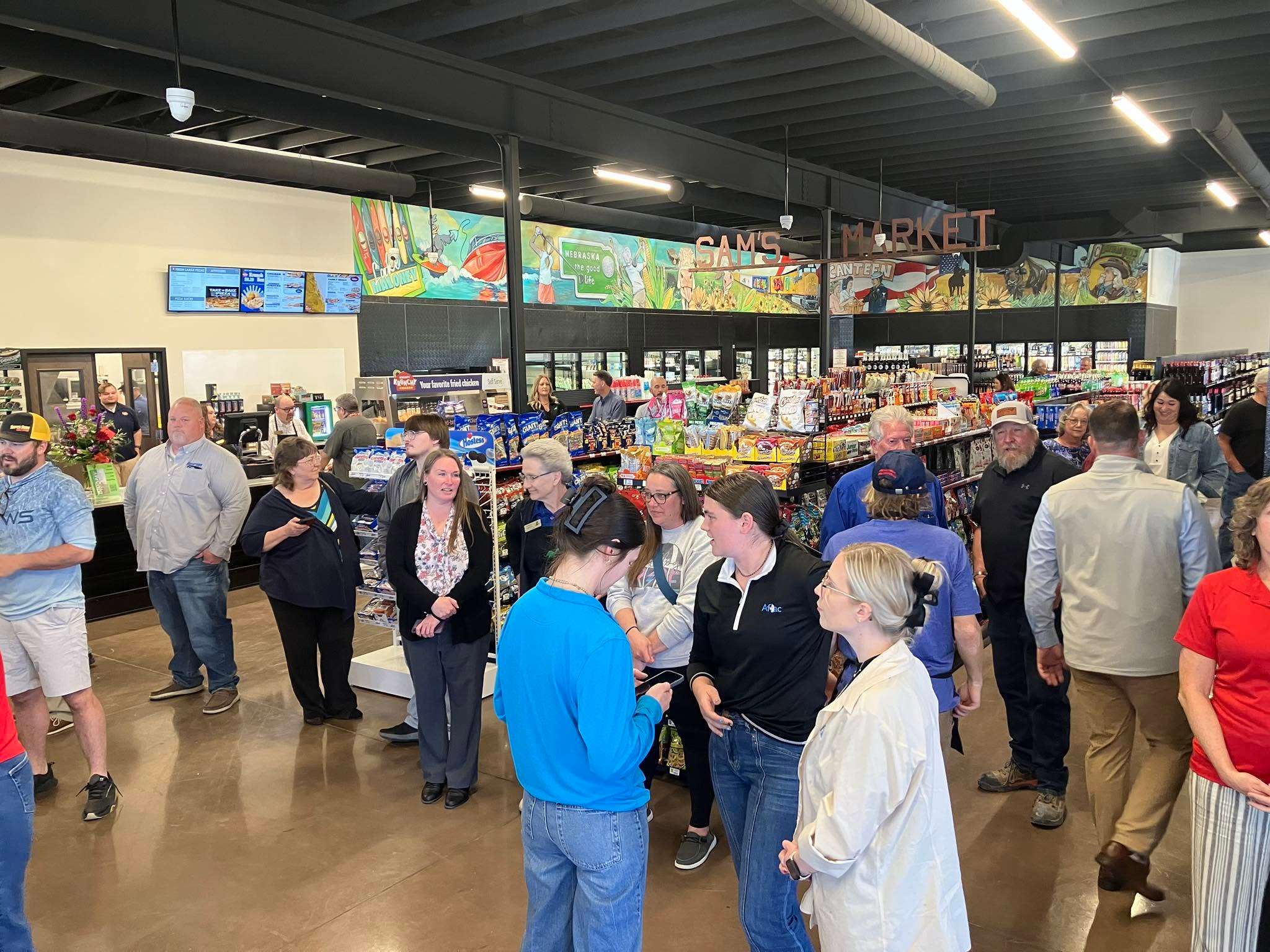
Carlini also emphasized that public art is often a collaborative effort. Some projects involve community members, while others bring together multiple artists. The wing murals found around North Platte, for example, were created as nonprofit fundraisers and included contributions from several artists.
Through her work with the Prairie Arts Center, Carlini continues to advocate for public art while helping connect businesses, organizations and communities with artists from across western Nebraska.
For residents driving through North Platte, her work can be found in places both large and small — a reminder that art is becoming an increasingly visible part of the community's identity.