


By Allison Peck
Listen to the interview with Gary Person on our Kubota Podcast
One day after Lincoln County commissioners tabled a proposed moratorium on data centers, state and local leaders are highlighting safeguards they say are designed to protect ratepayers while allowing Nebraska to compete for future economic development projects.
The discussion comes as residents continue raising concerns about electricity use, water consumption and the potential impact large-scale projects could have on local resources.
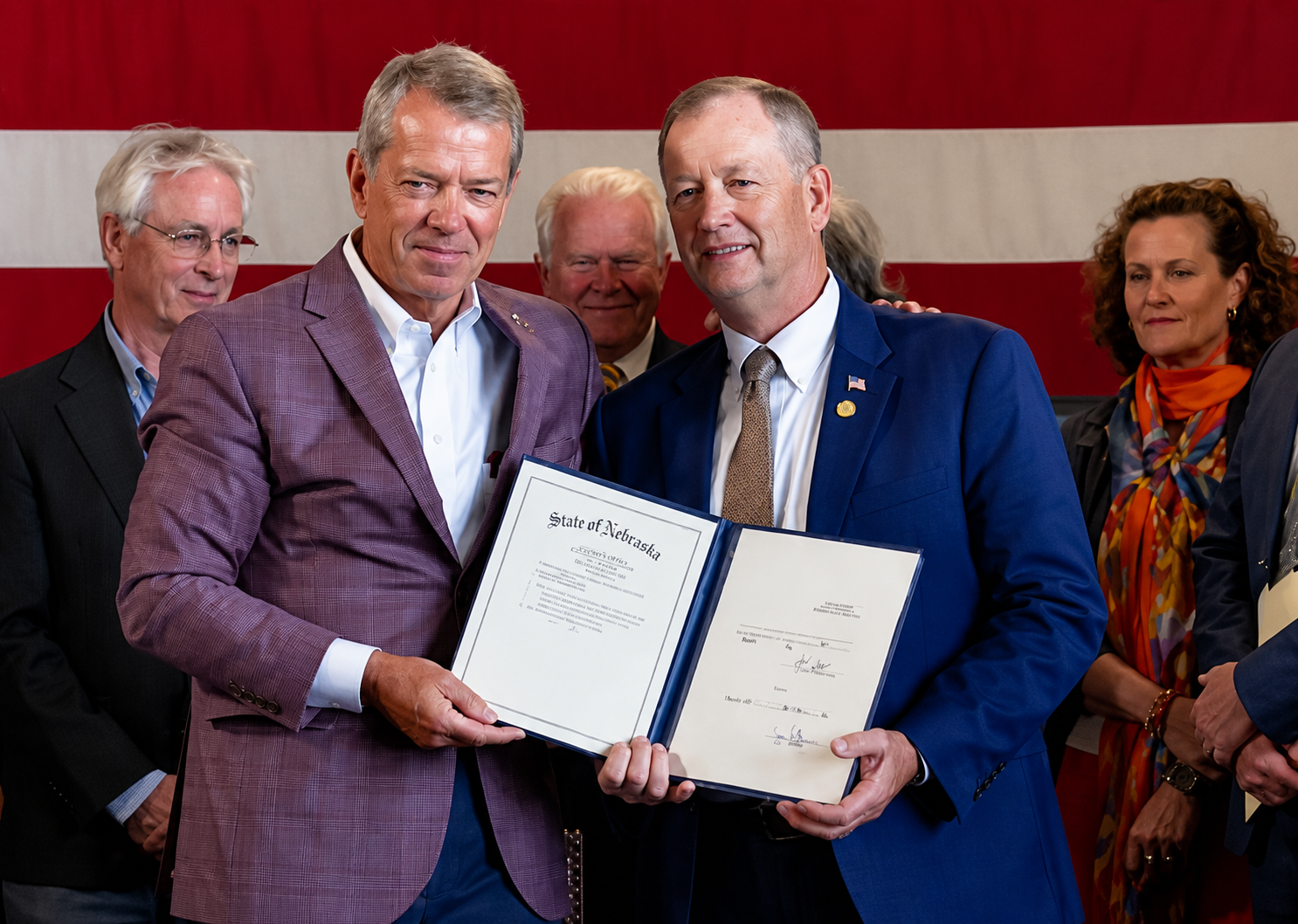
On Tuesday, Gov. Jim Pillen signed LB 1261, legislation supporters say was designed to address growing energy demands while ensuring the costs associated with major new electrical users are not shifted onto existing customers.
"We have to protect our ratepayers," Pillen said during the bill-signing ceremony.
The legislation was introduced by State Sen. Mike DeKay in collaboration with the governor and Nebraska's public power utilities.
"All of this investment will cost money, and the question is who is going to shoulder the burden?" DeKay said.
DeKay said Nebraska is seeing increasing demand for electricity from manufacturing, agriculture and computing industries, requiring additional generation and transmission infrastructure. He said LB 1261 allows private industry to make large capital investments while reducing financial risk to public power utilities and their customers.
"If these new hyperscale loads do materialize, this legislation protects public power by placing the cost burden on private industry instead of the public, the owners, the ratepayers of public power," DeKay said.
The topic has become increasingly relevant in Lincoln County following discussions about potential future data center development.

North Platte Area Chamber and Development Corporation President and CEO Gary Person said Lincoln County has already attracted interest from companies evaluating potential locations.
"I've had nine different companies explore Lincoln County," Person said during a recent interview with North Platte Post.
Person said many of the concerns being raised by residents deserve discussion, but he believes existing regulations and recent legislation provide significant protections.
"If we're going to look at the opportunity to have a data center here, we need to go into it with an open mind, vet it completely out, get all the facts on the table, protect the natural resources," Person said.
One of the most common concerns raised by residents involves electricity and whether future projects could increase costs for existing customers.
Person pointed to recent legislation allowing large energy users to develop power generation behind the meter.
"One thing, another law that's been adopted in the state, because we're a public power state, is allowing these high energy users to bring their own energy capacity Behind-the-Meter," Person said. "Behind-the-Meter means they're not connected to the grid system. They're not using any additional power that's currently available. They have to produce their own."
Person said misconceptions about electrical demand have fueled much of the public concern surrounding data centers.
"That's a really big misconception," he said when discussing fears that future projects would automatically increase costs for current customers.
"The Legislature made that very clear," Person added. "Data itself has to stand alone. It has to bear 100 percent of the cost."
Water use has emerged as another major concern among residents.
Person said Nebraska's Natural Resources Districts already regulate groundwater use and that local governments maintain authority through the conditional use permit process to establish additional requirements for individual projects.
"You can have additional things on your conditional use permit that the county would potentially adopt, saying we insist on it being a closed-loop system," Person said.
He also emphasized that local governments retain significant authority over potential projects.
"Part of the new legislation the state passed says they have to have conditional use permits," Person said. "Conditional use permits allows the county planning and zoning group, as well as the county commissioners themselves, the two public hearings in that process to put parameters, guidelines on it, requirements."
State Sen. Mike Moser said protecting ratepayers was one of the primary reasons lawmakers supported the bill.
"If something go wrong, then rate payers would have to bail it out and that wouldn't have been fair," Moser said. "So this bill allows public power to negotiate with these big power users to protect the rate payers."
For now, Lincoln County commissioners have directed additional review of county regulations and are expected to continue discussions in the coming weeks as they gather more information about potential future data center development.
Editor's Note: This article is part of North Platte Post's ongoing coverage of data center development, county regulations and related state legislation affecting Lincoln County and Nebraska.