


By Allison Peck
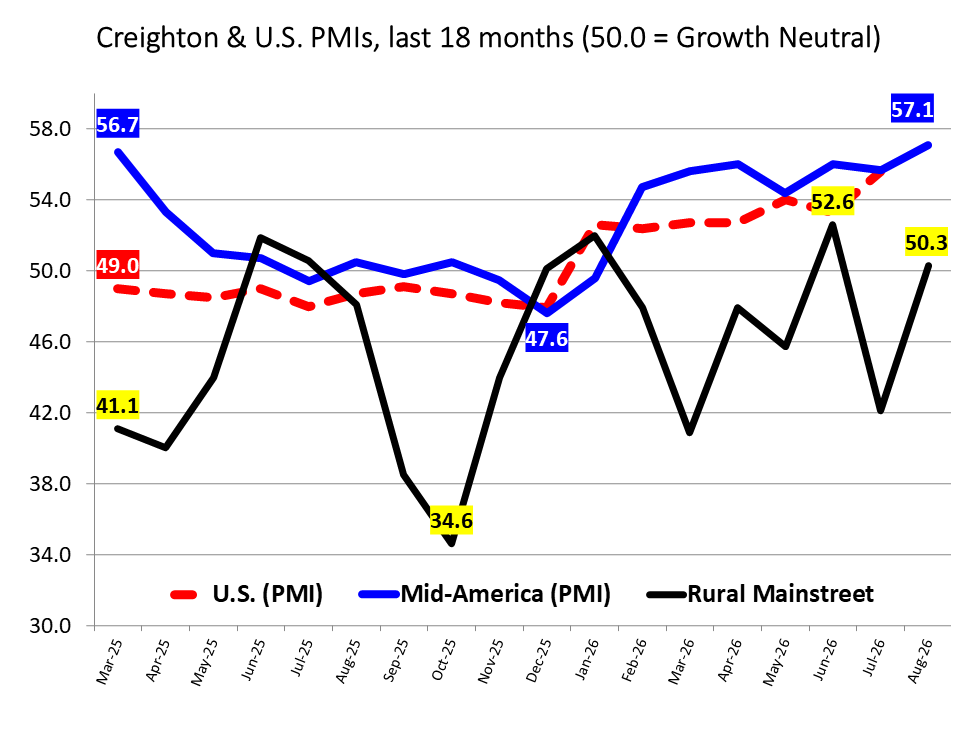
Manufacturing across the Mid-America region continued to show signs of improvement in August, according to the latest Mid-America Business Conditions Index from Creighton University Economics Professor Ernie Goss.
Goss says manufacturing activity is expanding at a solid and consistent pace across the nine-state region, with employment also showing improvement.
He says manufacturing jobs increased for the third time in the past 12 months, bringing the region close to where it was a year ago.
Nationally, manufacturing employment remains down about 14-thousand jobs from a year ago. The Mid-America region is down about 1,500 manufacturing jobs over the same period.

Goss says employers continue to report difficulty finding qualified workers for open positions. However, he says the region is seeing more hiring and relatively few layoffs.
Goss also says artificial intelligence has not yet had a major impact on manufacturing employment, with relatively limited use of A-I among manufacturers surveyed.
Hiring has been affected by a slowdown in data center construction, while the food processing industry continues to struggle, particularly in Nebraska and Missouri, where layoffs have hit the sector.
Inflation also remains a concern. Goss says higher oil prices are contributing to increased wholesale and retail prices, with oil currently in the range of 80 to 90 dollars a barrel.
He expects interest rates to rise in September, citing a weak labor market, continued inflationary pressures and high government spending.
Trade remains mixed, with exports moving above the growth-neutral level for the first time in some time. But Goss says he does not expect that improvement to last, as manufacturers continue to face higher costs for tariffs, materials, labor and transportation.
Goss says higher interest rates and continued inflation could slow economic growth, and he recommends watching the bond market for signs of where the economy is headed.
He says while the stock market may appear strong, the bond market provides a better indication of inflation and the direction of interest rates.