


By Zach Wendling | Nebraska Examiner
‘Sometimes, the right thing to do has a little cost that goes with it,’ says state DHHS CEO Steve Corsi
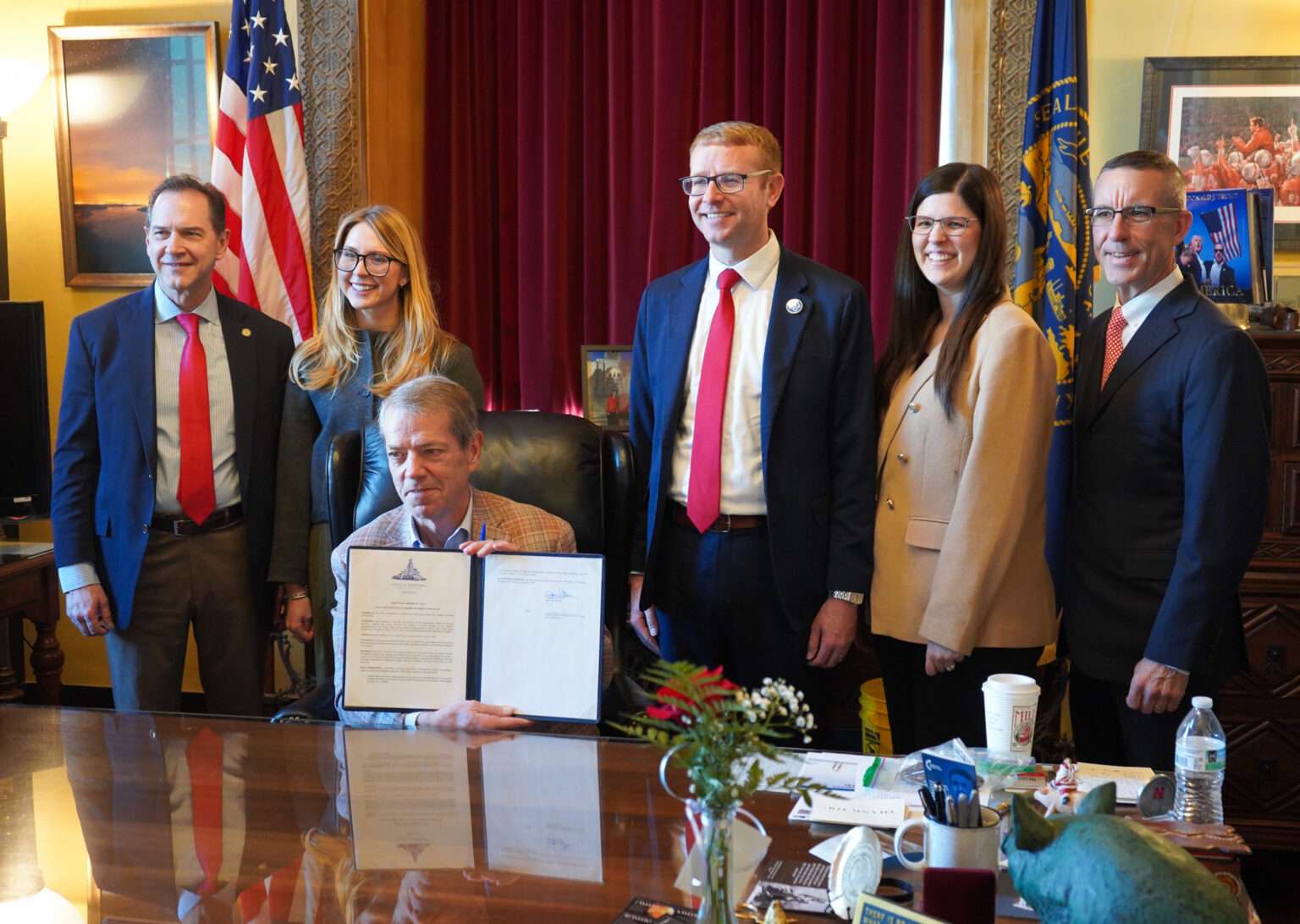
LINCOLN — Nebraska will no longer divert federal survivor benefits for youths in foster care to help reimburse the costs of their care, becoming the 12th state nationally to do so.
Nebraska Gov. Jim Pillen, in an executive order Tuesday, directed state officials to protect foster youths’ earned survivor benefits under the U.S. Social Security Administration, U.S. Department of Veterans Affairs and U.S. Railroad Retirement Board.
Trump’s Department of Health and Human Services called on the 39 states without foster care payment protections to change course in letters sent Dec. 11. That included Nebraska, the first to act since.
U.S. Assistant HHS Secretary Alex Adams, head of the department’s Administration for Children and Families, joined the Nebraska executive order signing Tuesday and commended Pillen. Adams has described the long-standing practice as an “orphan tax.”
Adams said Pillen demonstrated “moral clarity” in wanting to do right by children.
“We’ve seen other states lacing up their shoes to respond,” Adams told the Nebraska Examiner. “Nebraska took quick, executive, decisive action to protect the most vulnerable youth in its state. It doesn’t go unnoticed.”
Nebraska DHHS retained $1.4 million to cover costs of care in the most recent fiscal year. An agency spokesperson said DHHS has approximately 128 children who are state wards and have at least one parent who is deceased and are receiving the death benefits.
‘Everything to those kids’
Adams said someone brought the issue to him in Idaho, describing it as a problem that, at first glance, “sounds so cynical that you’re like, there’s no way that that’s happening.”
He said the money could be used for college or a first home or apartment and that some states had rationalized the spending as taking on parental costs. However, Adams said it didn’t make sense for orphans to pay for their own care using the last money from their parents while the state covered the costs for others.
Adams said Idaho’s total health department budget while he was agency head, and when the practice occurred, was about $5.5 billion. He said the department diverted about $500,000 in survivor benefits from about 250 youths in foster care.
“It was budget dust to the state, but it meant everything to those kids,” Adams said, who moved to end the practice.
Nebraska Department of Health and Human Services CEO Steve Corsi said it’s not quite “budget dust” in Nebraska, but “we can figure that out.”
“Sometimes, the right thing to do has a little cost that goes with it,” Corsi said. “And this is one of those.”
‘The right thing to do’
Corsi said the money will now go into trust accounts for the foster care youths’ futures. DHHS will also provide them with financial literacy education, no later than age 14, to help manage their funds.
Adams and Corsi, in an interview with the Examiner on Tuesday, described the partnership as fast-moving after the Dec. 11 letter. The two leaders had a previous relationship as state-level cabinet members.
Adams previously led Idaho’s health agency.
Corsi said he told Adams that he would need to talk to Pillen first. It was “literally a walk down the hall” in the Capitol, Corsi said, and Pillen responded, “Steve, we need to fix that. How fast can we get that fixed?”
Echoing comments Corsi said he’d heard from Pillen and Adams, Corsi asked, “How dare we take away the last positive gift or benefit that deceased parents can offer their child?”
“How dare we as a government do that?” Corsi said.
After getting his appointment from President Donald Trump last year, Adams said he wanted to take the lead on the issue at the federal level. He said Trump and U.S. Health and Human Services Secretary Robert F. Kennedy, Jr., shared his concerns and let Adams lead.
“At HHS, our guiding principle is simple: every child deserves a home and a fair chance to thrive. But when state agencies stack the deck against children, we step in,” Kennedy said in December. “We are committed to ensuring every child in America has the chance to reach their full potential.”
Order takes effect immediately
Once letters went out, Adams said many states didn’t know, which he credited in part to turnover at state HHS agencies and of governors nationwide.
“Oftentimes this is just one of those things running in the background that people are doing that they’re not stopping to ask, ‘Should we be doing that?’” Adams said.

The Nebraska executive order bars DHHS from using any survivor benefits to reimburse itself or contractors for the costs of a child’s care or maintenance while in state custody. Under current state law, DHHS could retain amounts over $1,000 in Social Security benefits a child receives.
“It is in the best interest of children who are eligible for such federal survivor benefits that those funds be conserved, used for unmet needs and made available to them as they transition to adulthood,” the executive order states.
Pillen ordered the changes to take effect immediately and mandated full compliance “as soon as practicable.”
“Executive state agencies shall cooperate in the implementation of this order to the fullest extent possible under Nebraska law,” the executive order states.
Pillen said in a statement that safeguarding the benefits “recognizes both the child’s right to these funds and our obligation to act in their best interest. Protecting these resources helps ensure youth in our care have greater stability as they prepare for independence.”
‘Long time coming’
State Sen. Megan Hunt of Omaha had worked since 2021 to help foster children retain more of their Social Security benefits. She passed a 2025 bill to require DHHS to screen state wards for eligibility, hold their benefits in trust accounts separate from state agency funds and provide more transparency on the use of such funds.
The 2025 bill originally would have helped foster youths keep more benefits, but with state financial pressures, Hunt worked with advocates and other senators to have an impact without as much cost at the time.
Of the new executive order, Hunt said in a text: “Very exciting!”
“Long time coming,” Hunt added. “Glad it’s done.”
Speaker John Arch of La Vista, a former chair of the Legislature’s Health and Human Services Committee, had worked with Hunt. He said he was also in favor of the state-level order.
Adams said other states have started the legislative process to respond, such as Mississippi and Utah, but he encouraged other states to follow Nebraska’s lead.
Corsi said he couldn’t comment on whether Nebraska might pursue legislation to put the executive order into statute without first talking to Pillen’s team. But he noted the order carries the weight of law.
“You don’t need to wait for the Legislature,” Adams said. “A strong leader who has moral conviction can do this today. Every governor has the power to do this today.”